

Invited to Bhutan, Part 2: Gelephu Mindfulness City, the City a King Is Building to Bring His People Home


The second of three articles on our Managing Director Henry Massey’s recent working trip to Bhutan. Part one covered the HRMNY partnership that took us there. This part is about where Bhutan is going next.
I have now visited a city that does not exist yet. Getting there took eight hours.
First, a quick recap for anyone arriving at this article cold. This July I travelled to Bhutan as part of an HRMNY delegation, invited by the country’s health and government leadership to explore the future of its healthcare technology. HRMNY has spent years building trusted relationships in Bhutan, and I joined as its CTO to bring the engineering perspective, through my software company Exe Squared, which builds the HRMNY platform. Part one tells that story in full. This part is about where Bhutan is going next, and the journey begins on a mountain road.
Eight hours over the mountains
The road south from Thimphu to Gelephu climbs into cloud and stays there. For long stretches visibility drops to a few car lengths and the convoy slows to walking pace. As you finally descend towards the southern plains, the route becomes a construction site: the road is being widened, which means sections of dirt track that open and close to traffic on a timetable, and long waits watching excavators work above your head. Local drivers take all of this in their stride, in ordinary two-wheel-drive hatchbacks, which tells you a lot about Bhutanese pragmatism.

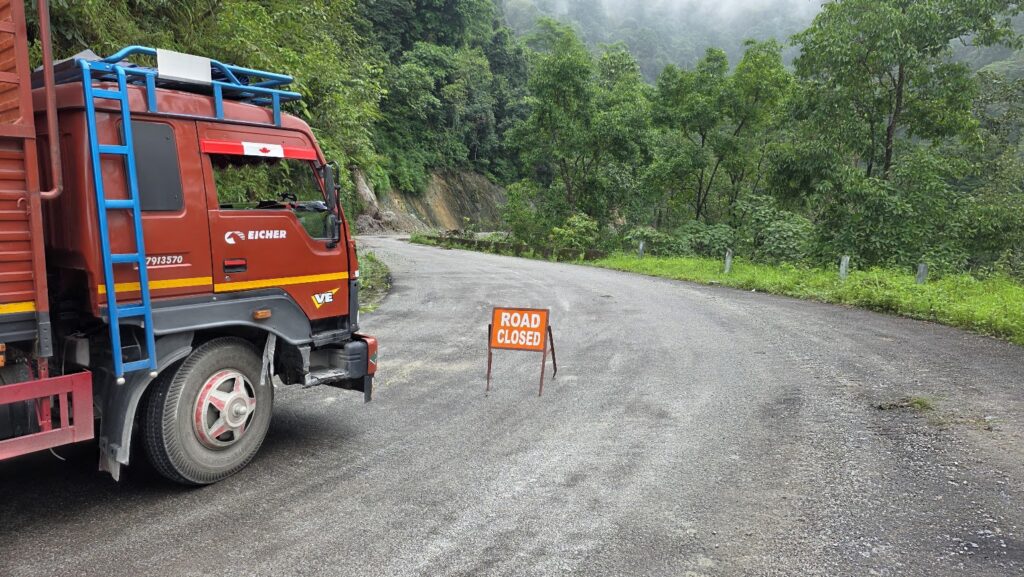

The mountain roads and the intermittent road block. Moving a boulder so that we could continue.
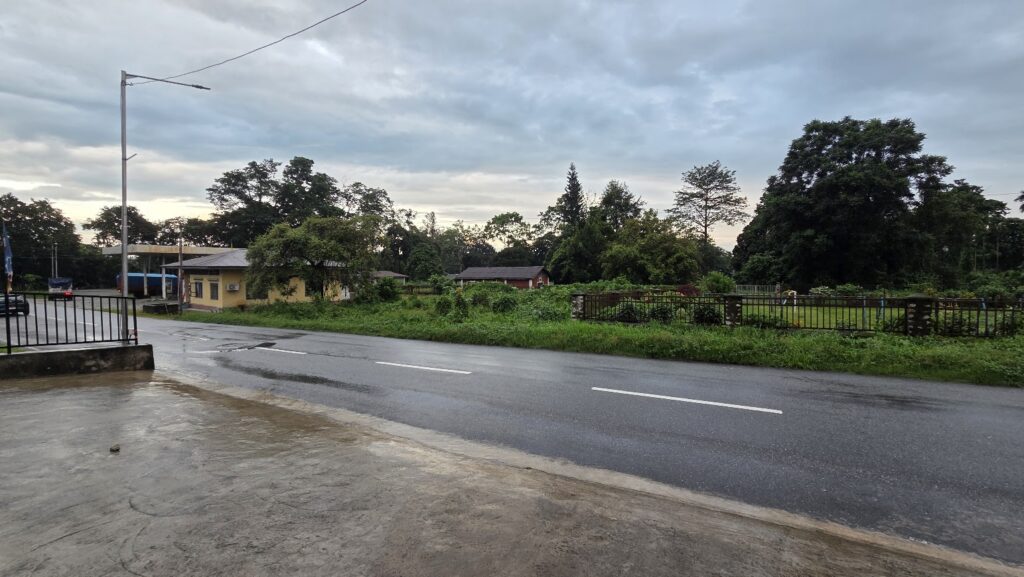
Then the mountains release you, the air turns subtropical, and you arrive in Gelephu: a warm, busy town pressed right up against the border with Assam, India. This unassuming place is the site of the most ambitious project in the country’s history.
The problem the city exists to solve
Bhutan has a population of well under a million people, and in recent years tens of thousands of its young, educated citizens have left, chiefly for Australia and the UK, in search of salaries the domestic economy cannot yet offer. For a small country, that is not a statistic, it is an existential question. Bhutan has done a remarkable job educating its people. The problem is keeping them.
Gelephu Mindfulness City, announced by His Majesty the Fifth King in December 2023, is the answer: build, at home, the kind of economy young Bhutanese are currently leaving to find.
What GMC actually is
It would be easy to dismiss GMC as another render-heavy “future city” announcement. The structure underneath suggests otherwise. GMC is a Special Administrative Region of roughly 2,500 square kilometres, about the size of Dorset, established by Royal Charter in early 2024 with its own legal and regulatory framework, deliberately distinct from the rest of the country and drawing heavily on Singaporean commercial law to give international business a familiar footing. The board is chaired by the King himself. The Governor, responsible for delivery on the ground, is Dasho Dr Lotay Tshering, Bhutan’s former Prime Minister and a surgeon by training. Our HRMNY delegation met him twice during the stay, and I will say more about those meetings in part three.
The masterplan, led by Bjarke Ingels Group with Arup, imagines mandala-inspired neighbourhoods laced along the rivers that run down from the mountains, with long-term ambitions measured in hundreds of thousands of residents. An international airport with an award-winning design is slated to open around 2029; today it is a vast, active construction site, and the King has personally led volunteer groups helping to clear the ground. A new hospital is planned, with clear ambitions for medical tourism. And, of particular interest to us, a Tier 4 data centre is due to open in GMC in the second quarter of 2027. To put that in context, the entire country currently operates a single Tier 2 facility. That one building will change what is digitally possible in Bhutan, and it is a thread I will pick up in the next article.
Gelephu tonight
What the renders cannot show you is what Gelephu is like right now, which turned out to be my favourite part of the trip.
On the Thursday evening our hosts took us to taste the produce of the Bhutan Centennial Distillery, a facility in Gelephu operated under the Army Welfare Project, which has been quietly making the nation’s spirits for decades. Then came the karaoke bars, which are wildly popular. People sang, brilliantly and without a shred of self-consciousness, in Dzongkha, English, Nepali and Hindi, and most of the room seemed comfortable in all four languages. Sitting in a border town in the Himalayan foothills listening to a four-language playlist, you understand that Bhutan is not remote in any cultural sense. It is a small country that has always lived between giants, and its people carry more languages in their heads than most Europeans.

AN evening out trying local whisky and then the national obsession – karaoke (picture of my host, Garab Dorji)
·

Two other things stay with me. Almost everyone I spoke to had never been overseas, and had never seen the sea. And in every shop, restaurant and home, there are photographs of the royal family: not out of obligation, as far as I could tell, but out of genuine affection. When people in Gelephu talk about GMC, they talk about it as the King’s promise to their children. That emotional foundation is not something you can pour like concrete, and it may matter more than the masterplan.
The economics underneath
Can a country of this size afford a project of this scale? Bhutan’s answer starts with water. The country generates its electricity from hydropower, and during the summer monsoon, when the rivers are at their fullest, it produces far more than it can use. Surplus power is exported to India, and in recent years it has also been directed into Bitcoin mining, an operation that has reportedly made Bhutan one of the top five sovereign holders of the asset. All of this sits inside one of the only carbon-negative economies on Earth: around seventy per cent of the country is forest, and the constitution requires that figure never falls below sixty.
Clean surplus energy, a distinct legal jurisdiction, serious digital infrastructure, and a monarch prepared to stake his personal authority on the outcome. That is the bet.

One of the main hydro electric rivers generating income for Bhutan and Gelephu now.
The honest view
Standing on a dirt road watching the airport site, the gap between vision and present reality is impossible to miss, and Bhutanese officials were refreshingly candid about it. But I went in expecting a brochure and found a charter, a legal system, a Governor with a delivery mandate, and thousands of citizens volunteering their labour. Whether GMC succeeds is a question for the 2030s. That it is serious is not in doubt.


Constructing a new city road, and the major new international airport under construction. And a vision of how it will look in a few years.
In part three: inside Bhutan’s hospitals, the x-ray queue where you can photograph the brain drain, and the report we researched, wrote and presented to the Governor in a single day.
Exe Squared is a software development and AI consultancy based in Exeter, and the engineering company behind the HRMNY platform. Part one of this series covers how the invitation came about; part three covers the digital health work itself.
